
Your Water Bill Is Telling You Something. Here's How to Actually Read It
A water bill looks like it's speaking a different language, CCF, tiered rates, meter readings in units nobody uses anywhere else in daily life. Once you know what those pieces actually mean, the bill stops being confusing and starts being genuinely useful, specifically as an early warning system for leaks you'd otherwise never notice.
Most water bills measure usage in CCF, hundred cubic feet, an oddly specific unit that converts to 748 gallons per CCF. So if your bill shows 8 CCF for the month, you used roughly 5,984 gallons, a number that means a lot more once you have something to compare it against.
That comparison point is the average household. According to EPA WaterSense data, the average American uses around 80 to 100 gallons per person per day, meaning a family of four typically lands around 10,000 to 12,000 gallons in a 30-day period. To find your own daily average, divide your total monthly gallons by the number of days in your billing cycle, most utilities print this calculation right on the bill itself, worth checking since it saves you the math.
Here's the part that actually matters practically: if your calculated daily usage runs meaningfully above that 80-to-100-gallon-per-person benchmark, and nothing about your household has genuinely changed, more people staying over, more laundry than usual, that gap is a real signal worth investigating rather than ignoring. A leaking toilet alone can waste up to 200 gallons a day, and toilets account for roughly 30% of typical home water use, making them the single most common hidden source of an unexpectedly high bill.
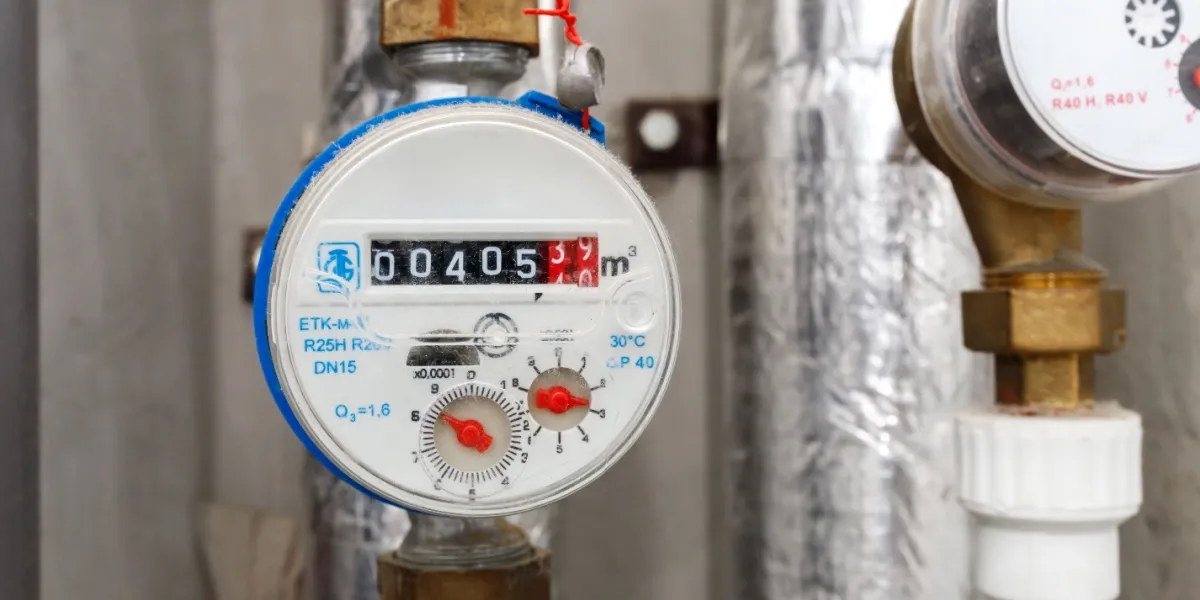
A simple test for exactly this: check your meter reading right before bed and again first thing in the morning, when no one's used any water overnight. If the reading moved at all during that stretch, you have a leak somewhere, and a toilet with a worn flapper valve is the most likely first place to check. A quick way to test a specific toilet: add a few drops of food coloring to the tank and wait 15 minutes without flushing, if color shows up in the bowl, the flapper is leaking and needs replacing, a cheap, simple fix once you know it's the culprit.
Watch for an "E" versus "A" marked next to your meter reading, standing for Estimated versus Actual. If your utility couldn't access or read your meter for a billing cycle, they estimate based on your history, and if that estimate ran low, your next actual reading can produce a jarring one-time spike that reflects catching up on unbilled usage from the prior period, not a sudden new problem, worth knowing before panicking over a bill that looks unusually high.
Tiered pricing is worth understanding specifically because it means your rate per gallon isn't flat, it increases as your usage crosses certain thresholds within the billing period. This is exactly why summer bills often spike disproportionately to how much more water you're actually using, outdoor irrigation and lawn watering push your total into a higher-priced tier, not just adding gallons at your normal rate.
A practical winter-specific check worth doing every year: if your household's winter water use, when there's no outdoor irrigation happening at all, exceeds roughly 12,000 gallons a month for a typical family of four, that's a strong signal of a leak somewhere in the system, since indoor-only usage during winter should sit meaningfully below what a household uses once outdoor watering season kicks back in.
Keeping a simple running log of your meter reading once a month, even outside of your official billing cycle, builds a personal baseline that's more useful than comparing against any national average. Once you know what a normal month genuinely looks like for your specific household, a deviation from that personal pattern stands out immediately, well before it shows up as a painful number on an actual bill weeks later. A phone note or a simple notebook by the meter is all it takes to start building that personal baseline this month. Once you're checking regularly, catching a problem early becomes a matter of routine rather than luck, and that alone can save real money over the course of an entire year, one small check at a time. That's the whole habit, and it takes less time each month than it took to read through this explanation of how it works. That's a genuinely good trade for the money it can end up saving.