A Wheelchair Ramp Costs Less Than the ER Visit It Prevents
Front steps that were never a problem for decades can become the single biggest barrier in a home almost overnight, after a surgery, a fall, or a gradual mobility change. A ramp solves that specific problem, and the range of options is wider, and often more affordable, than most people assume before actually pricing one out.
Temporary ramps are the least expensive and fastest option, running $50 to $600. Threshold ramps, small units bridging a low rise at a doorway, run $50 to $450 and work well for a single step or a slight ledge. Suitcase ramps, foldable and designed for portability, run $175 to $600, a practical choice for someone who needs a ramp at more than one location, home and a frequently visited family member's house, for example, or wants the option to bring it along when traveling.
Semi-permanent modular ramps run $350 to $3,000 and offer a middle ground: they rest on the ground rather than requiring permanent construction, so they can be removed or relocated if your needs change, but they're considerably sturdier than a temporary ramp. Most are aluminum, which means no rusting, no painting, and minimal maintenance beyond occasional sweeping.
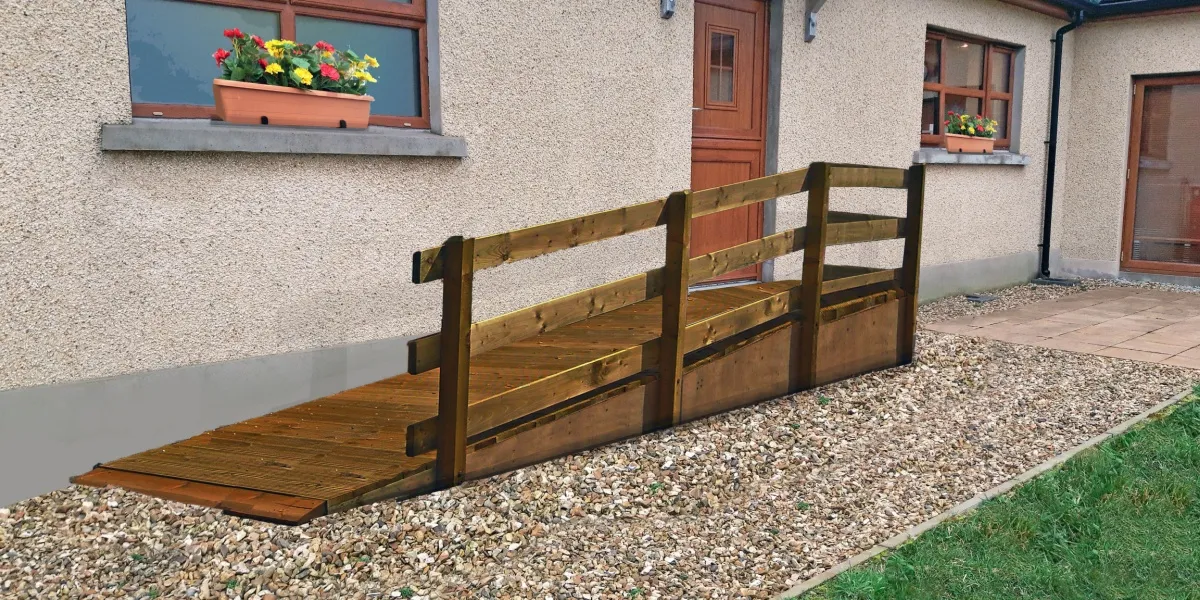
A permanent ramp, built from wood or concrete and designed to last for years regardless of weather, runs $1,000 to $6,000 or more, with national averages landing around $2,292 for a typical residential installation, and complex or lengthy configurations sometimes exceeding $8,800. This is the option worth choosing when the need is genuinely long-term rather than a temporary recovery situation, and it can be designed to complement your home's existing architecture and landscaping rather than looking purely functional.
The single biggest factor driving cost, more than material choice, is slope, and it's worth understanding before getting quotes. Most homes need a ramp built to the ADA-recommended 1-to-12 ratio, meaning every inch of vertical rise requires at least one foot of ramp length. A porch just 12 inches off the ground still needs a 12-foot ramp to meet that standard safely, which is why even a modest step-up can require a surprisingly long ramp and correspondingly higher material cost.
DIY is a real option for a simple, short ramp if you're comfortable with basic carpentry, running $500 to $2,000 in materials alone, plus $50 to $300 if you need to rent or buy tools. Permit and inspection fees still apply even for a DIY build in most areas. The tradeoff is real: a DIY ramp risks code violations, incorrect slope, or structural issues that a professional install avoids, and for something a family member's safety depends on daily, that risk is worth weighing seriously against the money saved.
If your need is genuinely temporary, recovery from a specific surgery, for instance, renting is worth considering over buying outright. Wheelchair ramp rental runs $80 to $200 or more per month, which for a recovery period of a few months can come out considerably cheaper than purchasing a ramp you won't need once the underlying situation resolves.
Funding help genuinely exists for this specific project, and it's worth checking before assuming the full cost falls on you. Medicaid Home and Community-Based Services waivers cover ramps in most states under an accessibility modification category, VA grants for qualifying veterans can cover ramp installation as part of a broader home adaptation benefit, and many Area Agencies on Aging offer smaller grants specifically for exactly this kind of modification. A quick call to your local agency before committing to any quote is worth the time it takes.
A detail worth confirming before installation day regardless of ramp type: handrail height and spacing, since these are almost always included in a proper installation for safety reasons and the price typically doesn't drop meaningfully if you try to skip them. A ramp without adequate handrails defeats much of the safety benefit it's meant to provide, particularly in wet or icy conditions, so this isn't a corner worth cutting even if a quote without handrails looks more attractive on paper. Get at least two quotes specifically confirming handrails are included in the base price before comparing bids on cost alone. That single comparison point matters more than almost any other line item when two quotes look similar at first glance but differ meaningfully once the full scope is actually spelled out in writing. Reading the full quote line by line, rather than skimming to the bottom-line total, is worth the extra few minutes every time.