Foundation Cracks: Which Ones Are Serious and Which Are Normal
FOUNDATION CRACKS
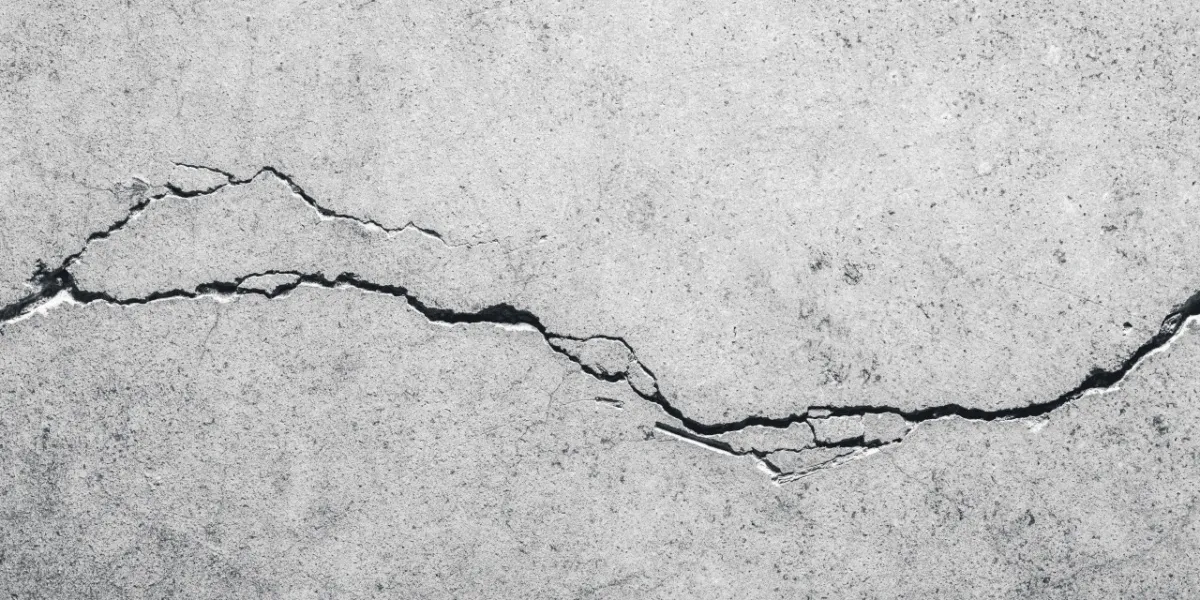
Not every crack in a foundation is a crisis, and not every crack is nothing either. The type of crack tells you almost everything you need to know before a contractor ever shows up, so it's worth learning to read them yourself first.
Here's how to read the four common types, from least to most concerning:
1. Vertical cracks, the least concerning type. These run straight up and down and are most often caused by normal concrete curing shrinkage or minor, even settling as the home ages. They're extremely common and usually don't indicate a structural problem on their own, though they can still let water in, so sealing them is sensible even when they're purely cosmetic. Repair typically costs $250 to $800 per crack using an epoxy or polyurethane injection, a straightforward, fast job.
2. Diagonal cracks, usually settling, sometimes more. These often show up at the corners of windows and doors, running at roughly a 45-degree angle. In small, stable form they usually indicate normal differential settling, one part of the foundation settling slightly faster than another, and are common enough not to automatically alarm anyone. The exception is a diagonal crack that runs the full height of a foundation wall corner to corner, or one that's wider than about a quarter inch, either of which suggests more significant structural movement and warrants a professional look before just sealing it and moving on.
3. Stair-step cracks in block or brick foundations. These follow the mortar joints in a zigzag pattern and typically indicate settlement or soil movement underneath one section of the foundation. Severity depends on the width and whether there's visible displacement, meaning one side of the crack has physically shifted relative to the other. A stair-step crack under about a quarter inch with no displacement is often manageable with monitoring or a standard repair. One with visible displacement usually needs the same kind of structural evaluation a horizontal crack would get.
4. Horizontal cracks, the one type that's never just cosmetic. A crack running horizontally across a foundation wall, especially in the middle third of the wall's height, indicates lateral pressure, usually from expansive soil, water pressure against the wall, or frost heave, physically pushing the wall inward. This is the most serious common crack type and should never be treated as a simple sealing job. Repair typically involves carbon fiber reinforcement strips or steel wall anchors, running $2,000 to $12,000 depending on the wall's length and how many anchor points are needed. If you see a horizontal crack anywhere in your foundation, get a professional evaluation promptly rather than waiting to see if it gets worse, since these tend to progress rather than stabilize on their own.
Width alone doesn't tell the whole story, and this is the detail that matters more than any other. A hairline crack under 1/8 inch with both sides perfectly level is almost always a water and sealing concern, not a structural one. Any crack, regardless of width, where you can feel or see one side has physically shifted relative to the other changes the calculation entirely and turns what might have been a simple few-hundred-dollar injection job into a potential five-figure stabilization project. This single distinction, displacement versus no displacement, is worth checking on every crack you find before assuming anything about severity based on width alone.
Foundation piering is the high end of this category, if it comes to that. Driving steel push piers or helical piers deep into stable soil to physically stabilize and lift a settling section of foundation runs $1,500 to $3,500 per pier, and most homes needing this level of work require somewhere between 4 and 12 piers, putting total underpinning projects at roughly $5,000 to $40,000 depending on scope. This is reserved for genuine structural settlement, not routine cracking.
Get an independent opinion before committing to major work of this size. A structural engineer's evaluation, typically $300 to $700, is worth the cost before signing off on anything beyond a simple crack injection, especially since some foundation repair companies have an obvious incentive to recommend the most expensive fix available. An engineer with no stake in selling you a repair gives you a second opinion that's actually independent.
Homeowners insurance usually doesn't cover any of this, which catches a lot of people off guard. Settling, soil movement, and general foundation wear are treated as maintenance issues and excluded from standard policies. Insurance typically only applies when a specific covered event, a fire, a fallen tree, a burst pipe, or a documented storm, directly caused the damage, which is a different situation from ordinary age-related settling.