
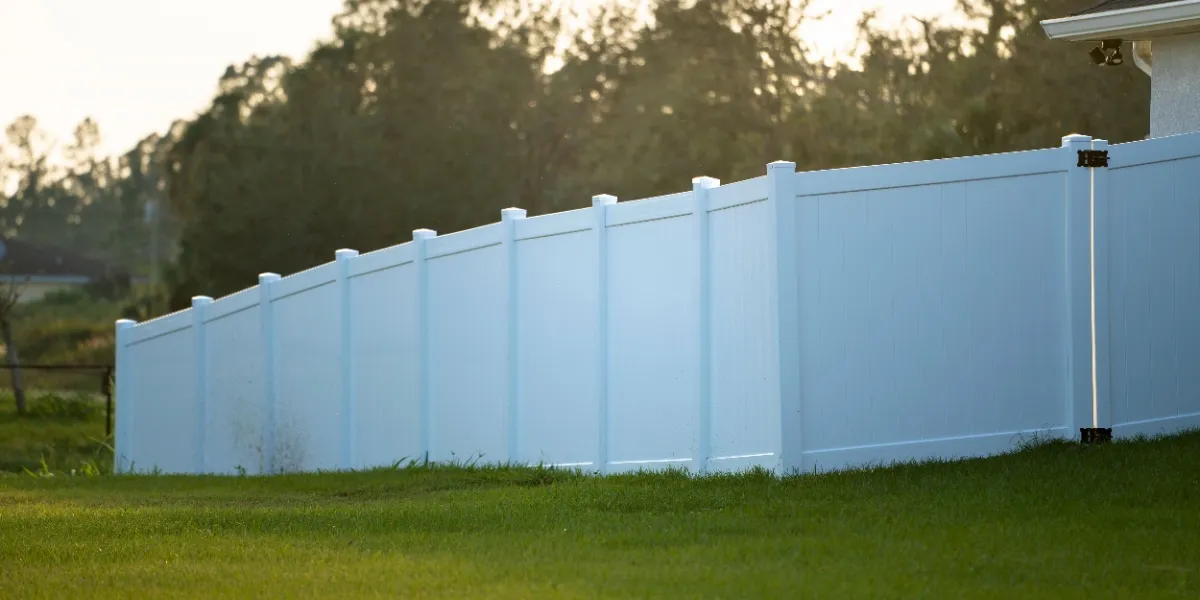
The Fence That Costs More Upfront but Wins Over Time
Wood almost always costs less to install. Vinyl almost always costs less to own over time. That tradeoff is the entire decision, and it's worth running the actual numbers before assuming the cheaper upfront quote is the better long-term value.
For a standard 6-foot privacy fence, wood typically runs $15 to $45 per linear foot installed, and vinyl typically runs $20 to $60 per linear foot installed. For a common 150-foot backyard fence, that works out to roughly $2,500 to $5,250 for wood and $3,000 to $6,000 for vinyl, wood winning on the initial number in nearly every comparison.
Wood needs real ongoing maintenance to hold up. Staining or sealing every 2 to 3 years is standard, and skipping it accelerates rot, warping, and insect damage. Material alone for that maintenance runs $25 to $45 per gallon, covering roughly 200 square feet, so a 150-foot, 6-foot-tall fence (around 900 square feet of surface) needs several gallons per application. Hiring a pro to handle the staining runs $1.50 to $3 per linear foot, or roughly $225 to $450 each time. On top of that, expect to replace a handful of boards most years starting around year five as wind, moisture, and ground contact take their toll.
Vinyl needs essentially none of that. No painting, staining, or sealing, ever. Dirt and mildew wash off with a hose or basic soap and water. Over a 25-year comparison, vinyl's total cost of ownership can run 50% to 75% lower than wood once you account for all that wood maintenance stacking up year after year, even though vinyl started out costing more.
Climate should factor into the decision as much as the numbers do. In humid or coastal regions, wood needs staining as often as once a year to keep up with moisture exposure, tightening that maintenance cycle considerably compared to the 2-to-3-year window that's typical in drier climates. Vinyl is essentially unaffected by humidity, which makes the maintenance gap between the two materials even wider in wet climates than it is elsewhere.
Resale value tends to favor vinyl too, though both add real value when they're in good shape. Vinyl fencing typically adds $2,000 to $5,000 in home value according to realtor estimates, prized specifically for being maintenance-free. A well-kept wood fence adds $1,000 to $3,000, but a faded, warped, or visibly neglected wood fence can actually hurt curb appeal rather than help it, which is the risk you're taking on with a lower-maintenance-commitment household.
A cautionary note worth knowing: choosing a lower grade of wood specifically to save money upfront can backfire hard. Standard pressure-treated pine is meaningfully more vulnerable to termites and rot than cedar or redwood, and homeowners who go with the cheapest wood option sometimes see significant board damage within just a few years, erasing whatever they saved on the initial install.
A few things worth checking regardless of which material you choose: whether your HOA has material or color restrictions (a surprisingly common reason for a rejected permit after installation), what the actual post spacing and depth will be (shallow posts are one of the most common reasons a fence leans within a few years), and whether the quote includes gate hardware, which sometimes gets priced as a separate line item.
If your budget is tight right now and you don't mind a recurring weekend project every couple of years, wood is a perfectly reasonable choice, especially with a durable wood species like cedar. If you'd rather pay more once and never think about it again, vinyl's higher sticker price is buying real freedom from a maintenance routine most homeowners underestimate before they've lived with it for a few years.
Composite fencing is worth a quick mention too if you're comparing options broadly. It blends wood fiber with plastic and runs $11 to $45 per linear foot, landing it somewhere between wood and vinyl on both price and maintenance, a reasonable middle ground if neither of the two main options feels like a perfect fit for your budget or climate.
Get at least two quotes on whichever material you're leaning toward, since labor rates for fence installation vary more by region and by contractor than the pricing ranges above might suggest, and post spacing, depth, and concrete footing quality are all things worth asking about directly rather than assuming every bid handles the same way. A slightly higher bid that specifies proper concrete footings is often the better long-term deal over a cheaper one that cuts corners on what's holding the whole fence up underground.