Stair Lifts: What They Really Cost
STAIR LIFTS
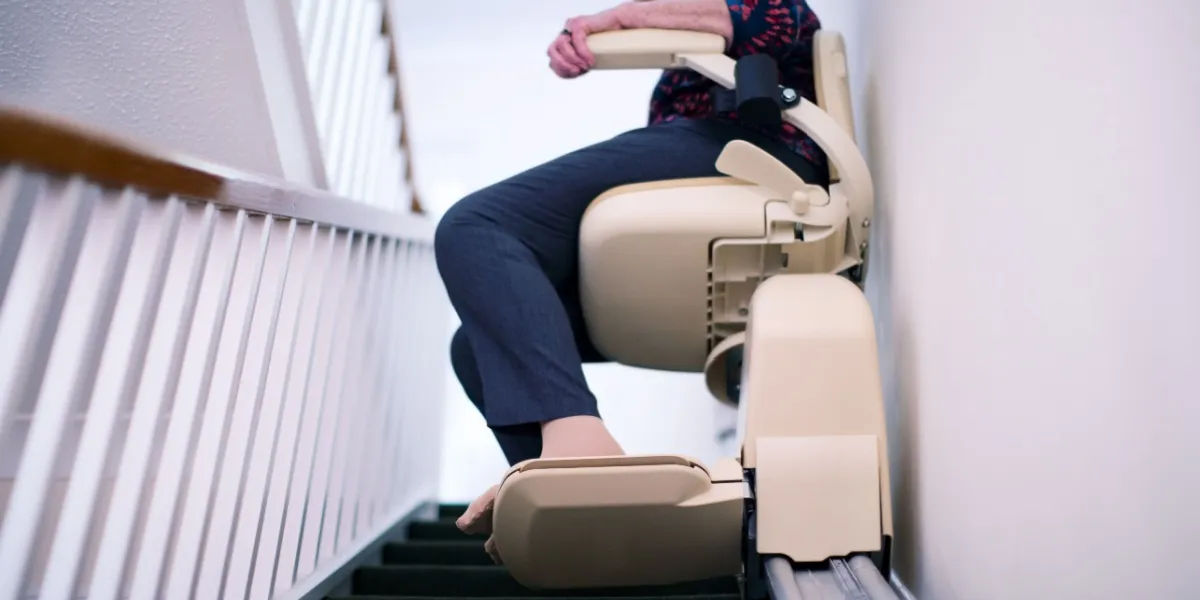
The price range on stair lifts is wide enough to be confusing if you haven't shopped one before, anywhere from $2,000 to $25,000 depending entirely on one factor more than any other: whether your staircase is straight or curved.
Costs break down clearly once you know which category your staircase falls into:
- Straight staircases (no landing or turn): $2,000 to $9,000 installed, most commonly $2,500 to $6,000. The rail comes pre-manufactured and gets cut to length on-site, so installation is fast, usually just a few hours.
- Curved or multi-landing staircases: $10,000 to $20,000 installed, and complex configurations with multiple turns can exceed $25,000. The rail has to be custom-manufactured for your exact stairway geometry, which is the single biggest price driver in the entire category, a curved lift for the same vertical distance as a straight one can cost two to three times more.
- Outdoor stair lifts: $3,500 to $12,000, built with weatherproof materials for a porch or deck approach.
- Platform lifts (for wheelchair or scooter users): $4,000 to $15,000 or more.
Installation labor alone, separate from the rail and chair hardware, typically runs $300 to $1,800 depending on complexity, and you should budget an extra $300 to $900 for any drywall repair the installation might require along the stairway wall.
If the need is temporary, recovery from surgery or a short-term mobility issue rather than a permanent situation, renting a stair lift runs roughly $50 to $200 a month, which is a meaningfully better deal than buying outright if you genuinely expect to need it for only a few months. Certified pre-owned straight stair lifts are another way to cut cost for a permanent need, often running $2,200 to $2,800 versus several thousand more for new.
Traditional Medicare generally does not cover stair lifts, since it's categorized as a home modification rather than durable medical equipment. Medicaid coverage varies significantly by state, and some state Medicaid waiver programs specifically for home modifications or aging-in-place support do cover part or all of the cost, so it's worth checking your specific state's program directly rather than assuming either way. VA benefits for veterans with a qualifying disability can also cover stair lift installation under certain home adaptation grant programs, which is worth investigating if you or a family member is a veteran.
Beyond straight versus curved, several other factors move your specific quote: the total length of your staircase, whether the lift is battery-powered (more common, less installation complexity) or hardwired directly into your home's electrical system, and any upgrade features like a power-folding rail or a swivel seat at the top landing. A battery-powered unit that charges at each end of the rail is now the more common choice for most residential installs, since it avoids the added electrical work a hardwired unit requires.
Get quotes from at least two companies before you commit to anything, since dealer markup on both hardware and installation varies more in this category than in a lot of home improvement trades. If your staircase is straight, confirm your quote reflects that, since some sales reps default to quoting a slightly more expensive semi-custom option unless you specifically ask about the standard straight-rail model. And ask directly what the warranty covers, since a stair lift is safety equipment your family will be relying on daily, not just a convenience purchase.
What happens if the power goes out is worth confirming before you buy too. Most modern stair lifts run on rechargeable batteries that get topped off at charging points on the rail, which means the lift will typically still work for a number of trips even during an outage, as long as the battery had a reasonable charge going into it. A hardwired unit without battery backup will simply stop working the moment the power does, which is worth knowing before you commit to that option over a battery-powered one.
It's worth remembering that a stair lift is meant to last many years of daily use, so a slightly higher price for better warranty coverage or a more established brand often pays for itself in fewer service calls down the road. It's also worth asking how quickly a technician can come out if something goes wrong once the lift is installed, since a stair lift that's down for a week while parts get ordered isn't just an inconvenience, it can mean someone loses access to an entire floor of their own home in the meantime.