Are Gutter Guards Actually Worth the Money?
Cleaning gutters twice a year, on a ladder, pulling out wet leaves by hand, is nobody's favorite chore. Gutter guards promise to make that chore disappear entirely. Whether they actually deliver on that promise, and whether the cost makes sense for your specific home, depends on a few details most sales pitches skip over.
Pricing varies by guard type more than almost any other home improvement category, since "gutter guard" covers several genuinely different products at genuinely different price points. Brush or foam inserts run $1 to $8 per linear foot installed, the cheapest option and the simplest to install, sometimes even as a DIY project. Aluminum or solid-top screens run $3 to $12 per linear foot. Premium micro-mesh systems, which use a fine metal screen to block even small debris while still letting water through, run $6 to $18 per linear foot, the most expensive tier but also the most effective at actually reducing cleaning frequency.
Here's the honest tradeoff most marketing glosses over: cheaper doesn't always mean worse, and more expensive doesn't always mean best for your specific property. Foam inserts are inexpensive but tend to deteriorate over time, and they can actually trap moisture inside the gutter rather than letting it drain freely, which in some climates causes more problems than it solves. Reverse-curve systems handle heavy rain well but can struggle with lighter rain, since there isn't enough water volume to follow the curve properly into the gutter channel.
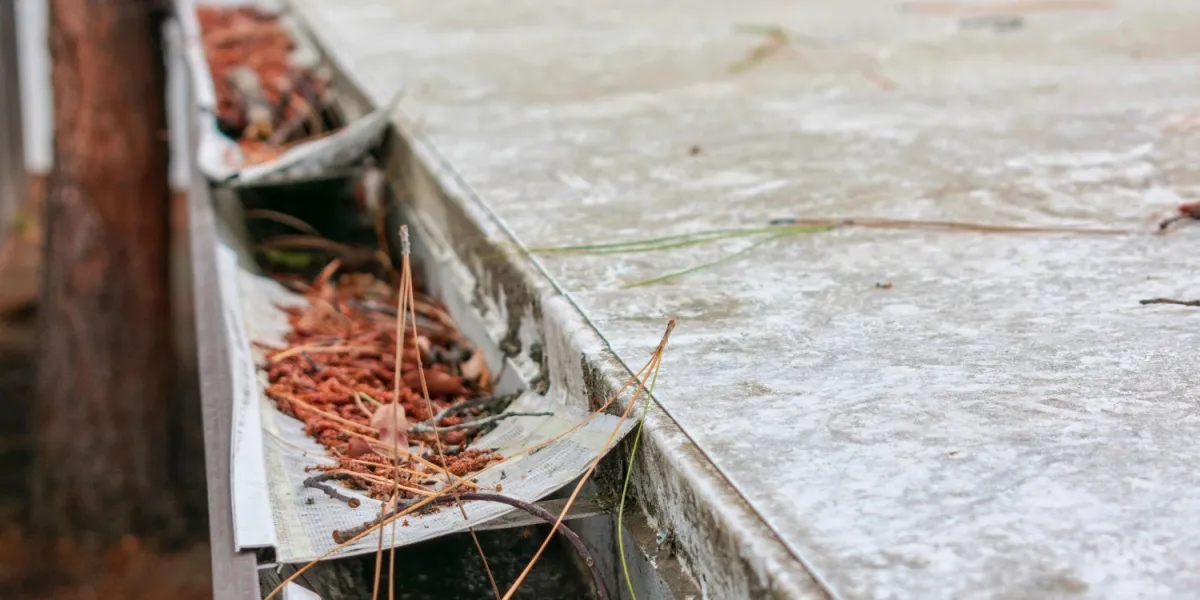
What you're actually trying to keep out matters more than the marketing claims on any specific product. A home surrounded by mature hardwoods, with large leaves that fall in bulk each autumn, has fundamentally different needs than a home surrounded by pine trees, where fine needles and pollen clog standard mesh sizes that would handle broad leaves just fine. A good installer factors in your actual tree cover, roof pitch, and local debris patterns before recommending a specific system, rather than just pushing whatever brand they happen to carry.
Do they actually cut cleaning frequency? Yes, generally, effective guards do reduce clog-related damage and cut how often gutters need attention. But "reduce" isn't the same as "eliminate." Even a well-matched micro-mesh system still needs occasional inspection, since fine debris, seed pods, and granules from asphalt shingles can accumulate on top of the mesh itself over years, even if they can't get into the gutter channel below.
A detail that changes the entire calculation: guards installed over gutters that are already damaged, leaking, or sagging can actually make those problems worse, and doing so can void the guard manufacturer's warranty entirely. If your gutters need repair or replacement, that has to happen first. Installing guards over a compromised system is treating the symptom while ignoring the actual problem underneath.
For complex rooflines, multiple valleys, or anywhere local building codes apply to exterior modifications, a licensed contractor is worth the extra cost over a DIY install, since precise fitting and flashing detail work in those spots protects your roofline from water damage in a way that's harder to get right without experience.
A simple way to decide whether the investment makes sense for your home: think honestly about how often you're currently cleaning gutters and what that costs you, either in your own time and physical risk on a ladder, or in what you're paying a service to do it. If you're cleaning twice a year and it's a genuine hassle or safety concern, guards in the $3 to $12 per linear foot range are a reasonable middle-ground investment. If you rarely have debris problems to begin with, because of your specific tree cover or roof design, the cost may not be worth it regardless of how effective any particular guard is.
One question worth asking any installer directly: what happens during a heavy, sudden storm rather than steady rain. Some guard systems that perform well in normal conditions let water overshoot the gutter entirely during an intense downpour, since the water is moving too fast to follow the guard's design into the channel. If your area gets sudden intense storms rather than steady rainfall, ask specifically how the system you're considering handles that scenario, since it's a real performance gap that doesn't show up in most marketing material. It's a fair question, and a contractor who can answer it specifically, rather than just repeating the general sales pitch, is usually the more trustworthy one to hire in the end, since specifics beat a canned script every time.