
If Your Roofer Won't Answer This, Walk Away
Most homeowners can't tell a good roofing job from a bad one just by looking at it, the real difference shows up years later when one roof is still holding and the other is leaking. The good news is you don't need to be an expert to protect yourself, you just need to know what a legitimate contractor will always tell you without being asked.
A reputable roofer volunteers their license and insurance information before you even ask for it. Every state has different licensing requirements, but a legitimate contractor should have no hesitation showing you a current license number and proof of liability insurance and workers' compensation coverage. If a contractor gets defensive or vague when you ask, that reaction alone is worth paying attention to, professionalism during the estimate tends to predict professionalism on the roof.
A complete estimate is more than a single number at the bottom of a page. It should itemize specific material brands and product lines, shingles, underlayment, flashing, not just "roofing materials." One of the most common sources of roofing disputes is work the homeowner assumed was included that the contractor considered extra. A trustworthy contractor will specifically walk through ice and water shield, drip edge, ridge vent installation, pipe boot replacement, chimney and skylight flashing, gutter reattachment, and haul-away of old materials, rather than leaving those as a surprise later.
There are two distinct warranties on any roofing job, and you want both explained clearly:
- Manufacturer warranty, covering defects in the materials themselves, curling, granule loss, sealant failure
- Workmanship warranty, covering the contractor's installation quality, ideally 5 to 10 years
A contractor who only talks about the manufacturer warranty and goes quiet when asked about their own labor warranty is telling you something important through that silence. Material defects are genuinely rare. Installation mistakes, poor flashing, missed nailing patterns, inadequate ventilation, are the far more common cause of a roof failing early, and that's exactly what the workmanship warranty is meant to cover.
Get at least three written estimates, not verbal quotes, so you can compare actual scope rather than just the bottom-line price. If one estimate comes in dramatically lower than the others, ask specifically what's being left out, a lower number with a shorter materials list or a shorter warranty isn't actually a better deal.
A subcontractor relationship is worth asking about directly too. Many roofing companies outsource part of the physical labor to subcontractor crews, which isn't inherently a problem, but you should know about it. Ask whether subcontractors are used, and if so, confirm they carry their own insurance and licensing, since a subcontractor without coverage can leave you exposed if someone gets hurt on your property.
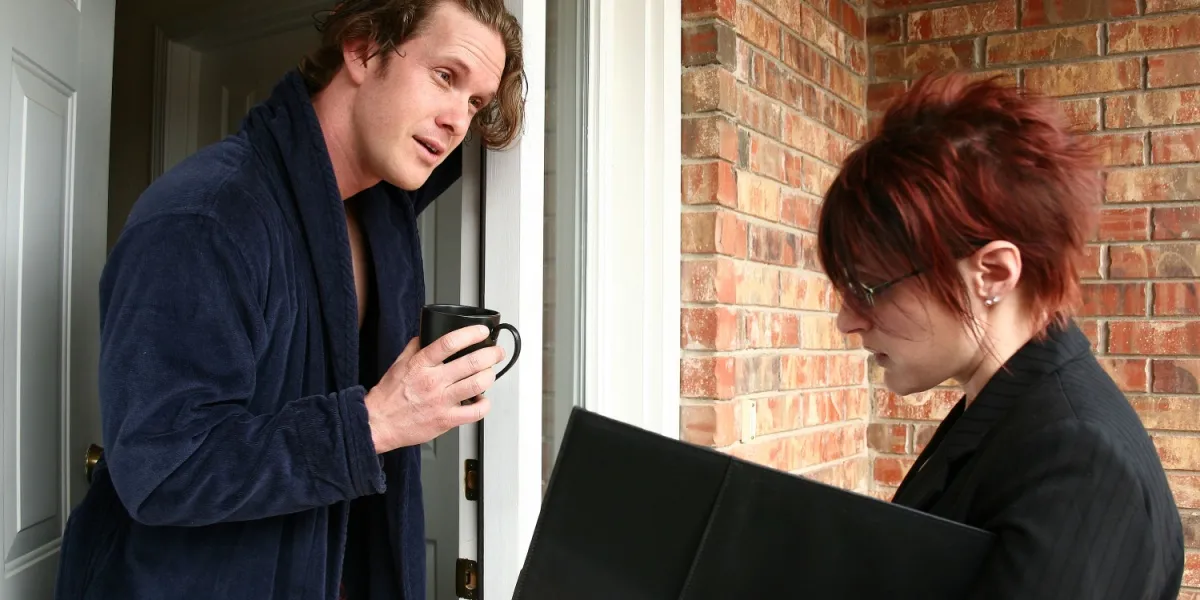
Storm season brings a specific pattern worth watching for: contractors who show up unannounced, claim they "noticed damage from the street," and create urgency around signing that same day. Some legitimate local companies do offer post-storm inspections, but aggressive door-to-door sales, especially from a company with no local address or history, is a real warning sign regardless of how reasonable the pitch sounds in the moment.
A quick verification step that takes five minutes: search the company's name and physical address online, not just their website, but review sites, social media, and your state's contractor licensing lookup. A company with no digital footprint outside of their own site, or one whose listed address turns out to be a P.O. box or a hotel, is not the contractor you want holding a ladder against your house for the next several hours or days.
Before any work begins, confirm the final inspection process too. A thorough contractor walks the completed roof with you, points out the work performed, and answers questions before considering the job done, rather than just sending an invoice and moving on to the next job.
One more practical test worth running before you sign anything: call the phone number on the estimate at a different time of day than your initial meeting, and see whether a real person or a professional voicemail picks up. Contractors who only communicate through a personal cell phone with no business line, no scheduling system, and no way to reach anyone but the one person who showed up at your door are operating without the basic infrastructure a job of this size deserves. It's a small five-minute test, but it tells you more about how the company actually operates than anything printed on the estimate itself.