Granite or Quartz? The Difference Isn't the Price Tag
Ask two contractors which countertop costs more, granite or quartz, and you'll likely get two different answers, and both of them might be right. Pricing on these two materials overlaps more than most homeowners expect, which means it's the maintenance commitment, not the material itself, that actually separates them.
Pricing overlaps more than most people expect. Quartz typically runs $50 to $200 per square foot installed, and granite runs $40 to $225 per square foot. Neither material is reliably cheaper than the other, since the final number depends more on the specific slab you pick (a common quartz color versus an exotic imported granite) than on which material category you choose. If a salesperson tells you one is definitively cheaper across the board, that's not quite accurate, pricing depends on the specific slab far more than the base material.
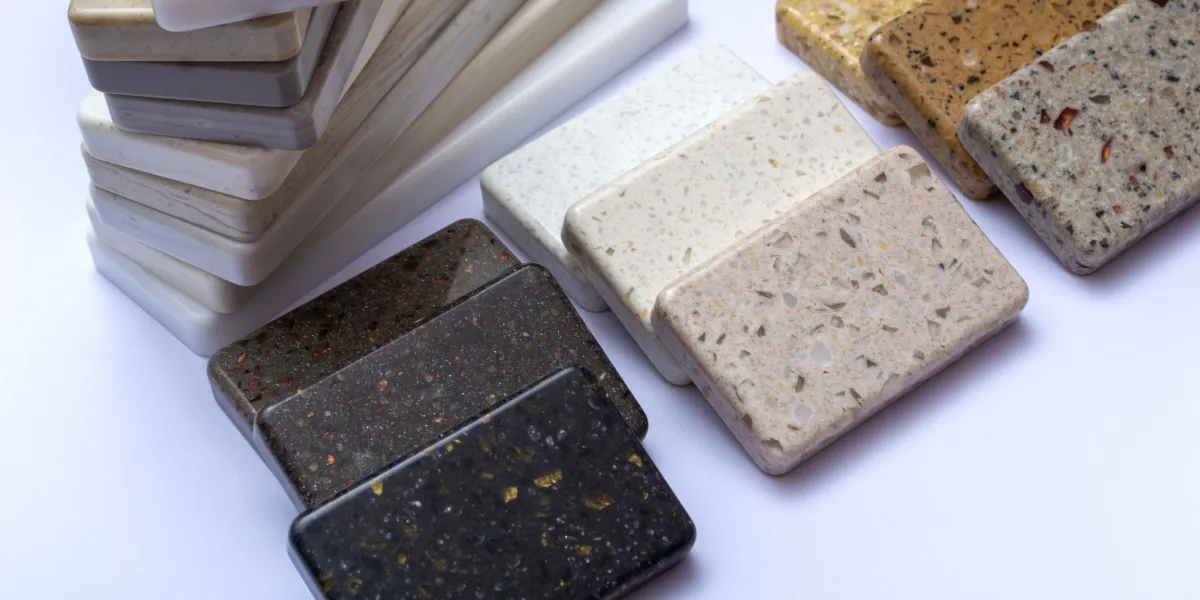
Quartz is engineered, not mined. It's made from roughly 90% to 94% crushed natural quartz mixed with polymer resins and pigments, manufactured in a factory rather than cut from a natural slab. That manufacturing process is exactly why quartz color and pattern are so consistent, you can order more of the same slab months later and it'll match, something that's essentially impossible with a natural material like granite.
Granite is a genuine one-of-a-kind natural stone. No two slabs are identical, which is part of the appeal for homeowners who want a countertop that looks unlike anyone else's. It scores a 6 to 7 on the Mohs hardness scale, resists high heat well, and can handle a knife blade without visible damage in most cases (though a cutting board is still smart). The tradeoff is that granite is naturally porous and needs to be sealed on installation and resealed roughly once a year to prevent staining and bacteria buildup in the microscopic pores.
Quartz needs essentially none of that maintenance. Because it's non-porous, there's no sealing required, ever. Spills wipe up with soap and water, and acidic foods like lemon juice or tomato sauce won't etch the surface the way they can on some natural stones. Quartz is slightly harder than granite on the Mohs scale (a 7) and more chip-resistant since it lacks the natural fissures found in stone, though it's somewhat less heat-tolerant, so a trivet under hot pots still matters.
The maintenance gap adds up over time even though it doesn't show up in the sticker price. Annual granite sealing runs $200 to $400 or more per year. Multiply that out over a decade and you're looking at a few thousand dollars in upkeep that a quartz countertop simply never requires. That's worth factoring into a side-by-side comparison even when the two materials quote at similar upfront prices.
Which one actually fits your kitchen depends on a few honest questions. If low maintenance is the priority, if you want a consistent, uniform look across the whole counter, or if you have young kids and want maximum stain resistance, quartz is generally the better fit. If you want the one-of-a-kind natural variation only real stone provides, don't mind an annual sealing routine, and want the strongest heat resistance for a household that cooks heavily, granite still holds its own.
Design trends are shifting slightly too, worth knowing if resale value factors into your decision. Quartz remains the default for minimalist, contemporary kitchens because manufacturers can control pigment for a clean, repeatable look. Granite has been making a comeback in warmer, earthier tones with matte, leathered finishes, appealing to homeowners moving away from the stark white-and-gray palette that dominated the last several years.
A practical way to decide: get quotes on the actual slabs you like, not just the material category, since a common quartz color and a common granite color often land within a few dollars of each other per square foot. From there, the maintenance commitment, not the price tag, is usually what actually settles the decision.
One more detail worth asking about during a quote: edge profile and overhang. A simple straight edge is included in most base pricing, while a bullnose, ogee, or waterfall edge can add several dollars per linear foot on either material. It's a small line item that's easy to overlook until it shows up as an unexpected add-on at the final invoice.
Ask to see a full slab in person before committing to anything, not just a small sample chip. Both materials can look noticeably different at full size, veining and pattern especially, and a sample the size of a coaster rarely gives an accurate picture of how a slab will actually read across ten linear feet of counter.