Home Battery Backup: What It Actually Does and Doesn't Do
A home battery sounds like it should solve the same problem a generator does, keep your power on during an outage, but the two work fundamentally differently, and understanding that difference is the key to knowing whether a battery actually fits what you need.
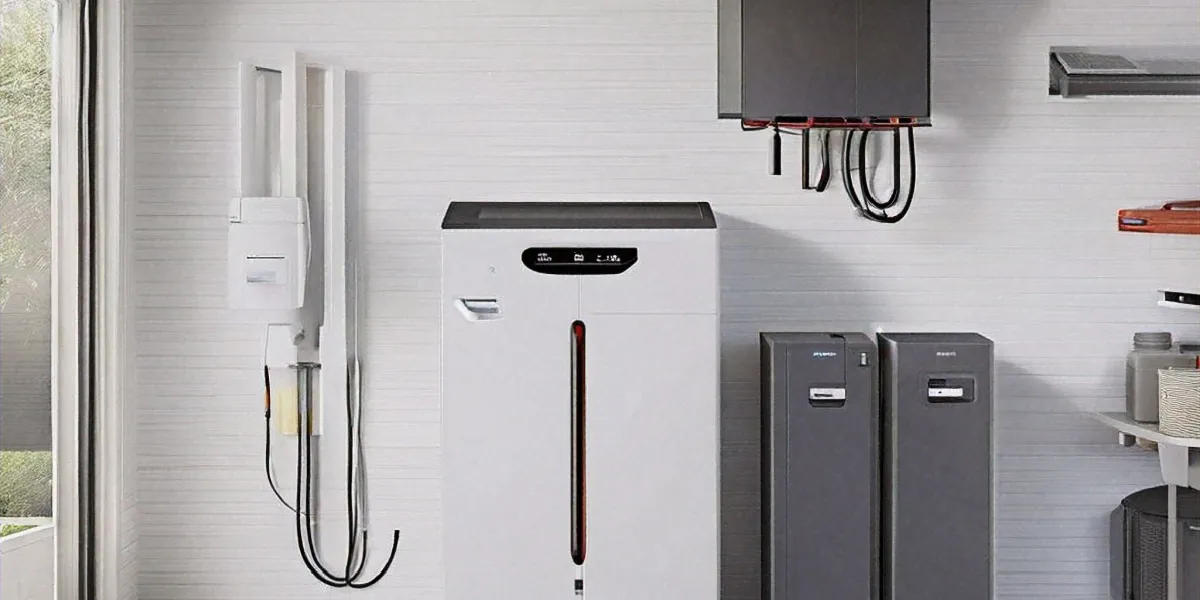
A typical home battery system stores 10 to 20 kWh of electricity and can deliver 5 to 11.5 kW of continuous power, enough to run essential circuits, refrigerator, lights, Wi-Fi, medical devices, and select smaller appliances, for roughly 8 to 24 hours during an outage, depending on your actual usage and the specific system. In 2026, the most popular residential batteries, Tesla Powerwall among the most recognized, run $8,000 to $16,000 fully installed, which typically breaks down as $8,500 to $10,500 for the unit itself, $1,500 to $3,000 for the gateway and balance-of-system components, and $2,000 to $5,000 or more for labor, permitting, and inspection.
Here's the honest limitation that a lot of marketing glosses over: a single standard battery is genuinely not enough to power a whole home through a demanding load, especially heating or cooling. A cold-climate heat pump can draw 3 to 5 kW per hour in freezing temperatures, meaning a single 13.5 kWh battery could be exhausted in roughly 3 to 4 hours under heavy heating demand. By contrast, that same battery can sustain a high-efficiency gas or oil furnace's blower motor, a much smaller electrical load than the heat pump itself, for over 24 hours, since the furnace's blower is all the battery has to power, the heat itself comes from gas.
This distinction matters enormously depending on your home's heating setup. If you have a gas furnace, a single battery can realistically cover your critical loads through a multi-day outage. If you have an all-electric heat pump as your primary heat source, a single battery is more of a short-term bridge than a full outage solution, and running your heat pump off battery power during a genuine winter storm outage would likely require multiple units.
Electric vehicle charging is another area where expectations often outpace what a single battery can actually deliver. Most EV batteries hold 60 to 100 kWh, and charging from a single 13.5 kWh home battery would add only about 40 to 50 miles of range while completely draining your home's backup power in the process, not a realistic strategy if the EV charge is competing with keeping your lights and refrigerator running.
Pairing a battery with solar changes the calculation meaningfully, since the battery can recharge from your own panels during daylight rather than relying purely on its stored charge. Without solar, a battery is a finite reserve that depletes and stays empty until grid power returns. With solar, a battery can partially replenish itself during an extended outage, which is the scenario where batteries genuinely shine compared to a standalone generator.
Utility demand response programs are worth checking in your specific area, since they can meaningfully change a battery's financial case. Programs like utility-run peak-event initiatives let your battery discharge stored energy back to the grid during high-demand summer events in exchange for a bill credit or direct payment, which can offset a meaningful part of the system's cost over time even outside of actual outage scenarios.
A practical way to decide if a battery fits your situation: if you have a gas-heated home and mainly want quiet, seamless backup for critical circuits without a generator's noise or fuel management, a single battery is a strong fit. If you have an all-electric home, particularly with a heat pump as primary heat, or want genuine whole-home backup through a multi-day outage, you're likely looking at multiple battery units, a generator instead, or a battery-generator combination, and it's worth having an installer size the actual solution around your specific electrical loads rather than assuming one popular unit will cover everything.
One detail worth remembering from the earlier generator research still applies here directly: the federal tax credit that used to apply to battery storage expired December 31, 2025, alongside the broader residential clean energy credits repealed by the One Big Beautiful Bill Act. If a quote you're reviewing still factors in that credit, it's using outdated assumptions, and it's worth asking the installer to rerun the numbers without it before you commit to anything based on that math. That single correction can meaningfully change the actual payback period you're being shown on paper by an installer who hasn't updated their pitch yet.