Is Your Electrical Panel Too Old to Handle Modern Appliances?
ELECTRICAL PANEL UPGRADES
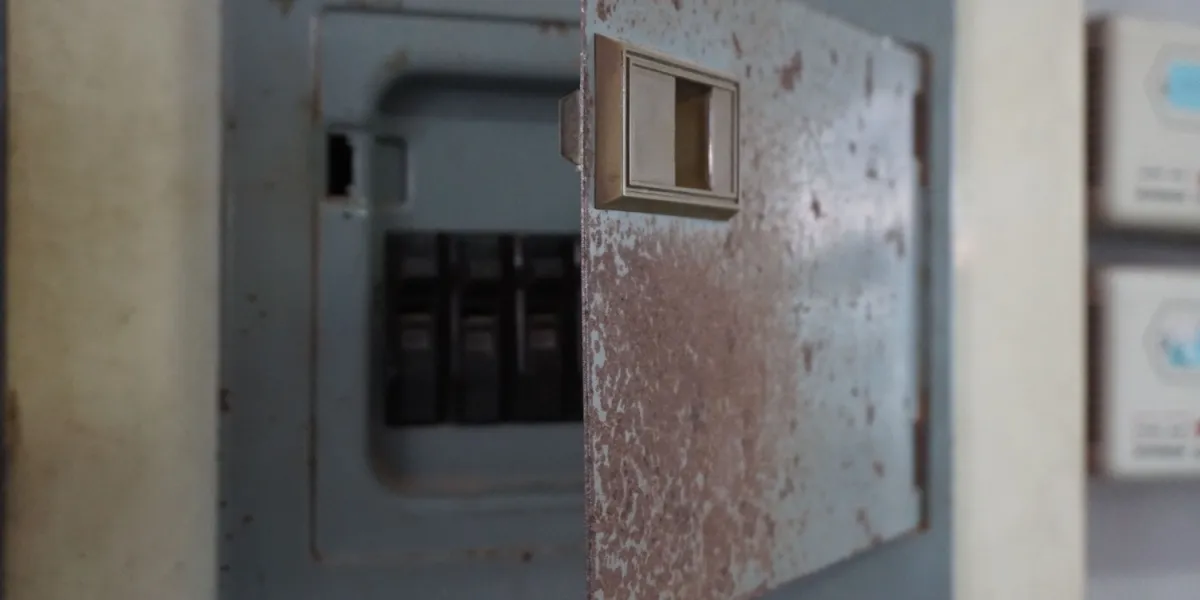
Homes built before 1990 often shipped with 100-amp electrical panels, which was plenty for the appliance load of that era. It's not always plenty now. Between EV chargers, heat pumps, larger HVAC systems, and homes simply running more electronics than they used to, a lot of older panels are quietly running closer to their limit than most homeowners realize.
A few warning signs are worth taking seriously the moment you notice them:
- Buzzing or crackling sounds from the panel itself point to loose wiring or an arc-fault issue and warrant an immediate professional look, not a wait-and-see.
- Lights that flicker or dim when a larger appliance kicks on, the dryer, an AC compressor starting up, usually signals a panel that's being pushed close to its capacity.
- A panel or breaker that feels warm or hot to the touch is a genuine fire risk and should be treated as urgent.
- Breakers that trip repeatedly, especially when you haven't changed how you're using power, suggest the panel can no longer reliably handle your household's actual demand.
Upgrading from a 100-amp to a 200-amp panel, the most common residential target and generally considered the modern baseline, typically runs $1,300 to $4,000 in most markets as of 2026, with the bulk of quotes clustering around $1,500 to $3,000. Simpler jobs with easy access and no major complications can come in under $2,000. More complex installs, difficult panel placement, a full rewire of some circuits, or a new meter base and utility connection, can push the total to $5,000 to $10,000 or more. A basic repair rather than a full panel swap, fixing a single bad breaker or connection, can start as low as $500 to $800.
Panel upgrade and service upgrade get used interchangeably, but they're not the same thing, and it matters for your budget. A panel upgrade swaps the breaker box inside your home. A full electrical service upgrade also involves the components connecting your home to the utility grid, the service entrance cable, the mast, and the meter base, and when that's part of the job, both the scope and the cost grow, often landing in the $1,800 to $6,000 range depending on what the utility side requires.
Thinking about an EV charger down the road changes this calculation more than people expect. A Level 2 EV charger needs a dedicated 240-volt circuit rated at 40 to 60 amps, which is a serious load on a 100-amp panel that may already be running close to capacity with existing appliances. If you're upgrading your panel for any reason and think an EV charger might be in your future even a few years out, having the electrician pre-wire or run conduit for that circuit during the current job typically adds only $100 to $300, versus reopening the panel and doing it as a completely separate project later.
Most current code requirements go beyond just the new panel and breakers themselves. A whole-house surge protector installed at the panel to guard sensitive electronics against voltage spikes, along with updated grounding and water pipe bonding, are standard parts of a compliant installation in most jurisdictions now, not upsells. A quote that's missing them either isn't accounting for current code or is planning to bill them separately later.
If your home still has a Federal Pacific Electric or Zinsco panel, that's worth flagging specifically. Both were manufactured decades ago and have documented histories of breakers failing to trip properly during an overload, which defeats the entire safety purpose of a breaker. If you have either brand, it's worth getting an electrician's opinion specifically on that panel regardless of whether you're otherwise noticing any of the warning signs above, since the failure mode with these older panels is that they can look and function normally right up until the moment they don't.
Getting an electrician out for an inspection is the practical next step if you're seeing even one of the warning signs above, panel issues are one of the few home systems where waiting to see if it gets worse carries real fire risk rather than just inconvenience.
Get at least two quotes for any panel upgrade, and ask each electrician to specify whether their number includes the permit and inspection fees or whether those are billed separately, since that's a common place for a quote to look cheaper upfront than what actually shows up on the final invoice.
None of this needs to happen overnight even if your panel is showing its age. A planned upgrade scheduled a few weeks out almost always costs less than an emergency call after something actually fails, so getting ahead of it while everything's still functioning normally is worth the small effort now.