You Might Not Need All-New Cabinets. Here's the Cheaper Fix
A full kitchen cabinet replacement is one of the priciest line items in a remodel, and a lot of homeowners never realize there's a genuinely good middle option that costs a fraction of the price and takes a fraction of the time.
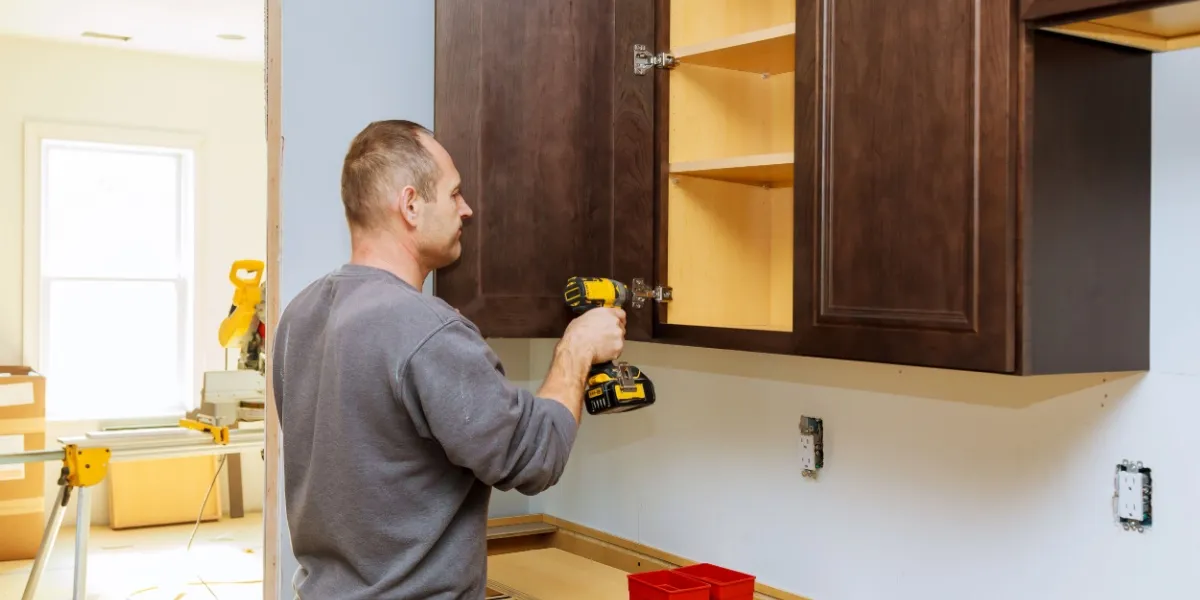
Refacing means keeping the existing cabinet boxes exactly where they are, and just skinning them with new veneer while swapping in new doors, drawer fronts, and hardware. The structure underneath, the part that's actually bolted to your walls and holding everything together, stays untouched. Full replacement tears everything out down to the studs and starts over with entirely new boxes, doors, and interior systems.
The price gap is the whole reason this comparison matters. Refacing typically runs $4,000 to $10,000, averaging around $6,750 to $7,230 nationally, or roughly $100 to $250 per linear foot. Full replacement runs dramatically higher, and industry data consistently puts refacing at 30% to 50% less expensive than replacement, with some sources citing savings as high as 78% depending on the scope of the original replacement project being compared against.
Refacing isn't just cheaper, it's also faster. Since the boxes stay in place, there's no demolition, no rerouting of plumbing or electrical, and no gap where your kitchen is unusable for weeks. Most refacing projects wrap up in a few days rather than the several weeks a full gut renovation typically requires.
Resale value holds up better than you might expect for the cheaper option too. Homeowners typically recoup 70% to 80% of a refacing investment when they sell, a return that's competitive with full replacement in a lot of markets, since buyers generally can't tell from a walkthrough whether cabinets were refaced or replaced, they just see clean, updated cabinetry either way.
So when does refacing not make sense? The honest answer is when the boxes themselves are the problem, not just the look. If your existing cabinets have water damage, structural issues, particle board that's swelling or delaminating, or a layout that genuinely doesn't work for how you use the kitchen (not enough storage, an awkward corner, appliances that don't fit), refacing just puts a nice face on a problem that's still there underneath. In that case, the layout and structural issues need a full replacement to actually get solved.
If your current layout works fine and the boxes are structurally sound, which describes a lot of kitchens where the complaint is purely "it looks dated," refacing is very likely the better move financially, and the results genuinely can look like a full remodel from the outside.
What actually drives the cost within refacing itself:
- Material choice for the new veneer and doors: laminate is cheapest, wood veneer costs more, solid wood doors cost the most. A smaller project with laminate materials might run as low as $1,200, while an all solid-wood refacing project across a large kitchen can reach $16,000 or more.
- Cabinet count and layout complexity, since more doors, drawers, and unusual shapes mean more labor regardless of material.
- Hardware replacement, hinges, pulls, and knobs, which is usually included but worth confirming isn't billed separately in a lowball quote.
A practical way to decide which route makes sense for your kitchen: open every cabinet door and drawer, and check for water stains, soft or swelling wood, or doors that don't sit flush anymore. If everything's solid and it's purely a cosmetic complaint, get refacing quotes first. If you find genuine structural issues, or the layout itself is the real problem, that's the signal to start pricing full replacement instead, since refacing won't fix what's actually wrong.
Get at least two refacing quotes and one full replacement quote before deciding, even if you're fairly confident refacing is the right call. Seeing the actual dollar gap for your specific kitchen, rather than relying on national averages, is the only way to know for certain whether the savings are worth the tradeoff of keeping your current layout exactly as it is. Some contractors specialize specifically in refacing and can spot structural issues during that initial visit that you might miss on your own, which is a useful gut check before committing either way.
Ask specifically whether the quote includes new drawer boxes, not just drawer fronts. Old drawer boxes with worn-out slides are a common thing that gets glossed over in a refacing pitch, and replacing just those internal components, without touching the outer cabinet structure, is a reasonable middle step if that's the actual source of your frustration with the kitchen.