Walk-In Tubs: Worth the Cost, or Better Spent Elsewhere?
A walk-in tub is one of the more expensive single fixtures you can put in a bathroom, and it's also one of the most polarizing among the professionals who actually install bathroom accessibility features. Some swear by them. Others steer clients toward a walk-in shower instead. The honest answer depends on exactly what problem you're trying to solve.
Pricing spans a genuinely wide range depending on features. Basic walk-in tubs start around $3,000 to $4,000. Mid-range models with common upgrades, a built-in seat, hand-held shower attachment, quick-drain technology, run $8,000 to $13,000, with most homeowners landing around $8,000 to $13,100 total including installation. Higher-end models with hydrotherapy jets, heated seats, or bariatric-width designs for larger users push into the $15,000 to $30,000 range. Specialty configurations exist too: two-seater tubs designed for two people to bathe together run $7,700 to $13,700, and tub-and-shower combo units, which let someone shower standing or bathe seated, run $3,200 to $9,500.
Installation isn't always as simple as swapping one tub for another, and this is where quotes can grow beyond the sticker price. If the new unit requires upgraded plumbing to handle the tub's fill and drain rate, or new electrical for features like heated seats or jets, that adds separately to the total. Permit fees, site prep, and disposal of the old tub typically add another $300 to $1,000 on top of the unit and labor.
Here's the part that surprises a lot of people researching this for the first time: Medicare generally does not cover walk-in tubs. Medicare Part B covers durable medical equipment, but a walk-in tub is classified as a home modification rather than medical equipment in most cases, which puts it outside that coverage category entirely. Medicaid coverage varies by state and specific waiver program, so it's worth checking directly rather than assuming either way. VA grants for qualifying veterans with service-connected disabilities can cover walk-in tubs as part of a broader home modification grant.
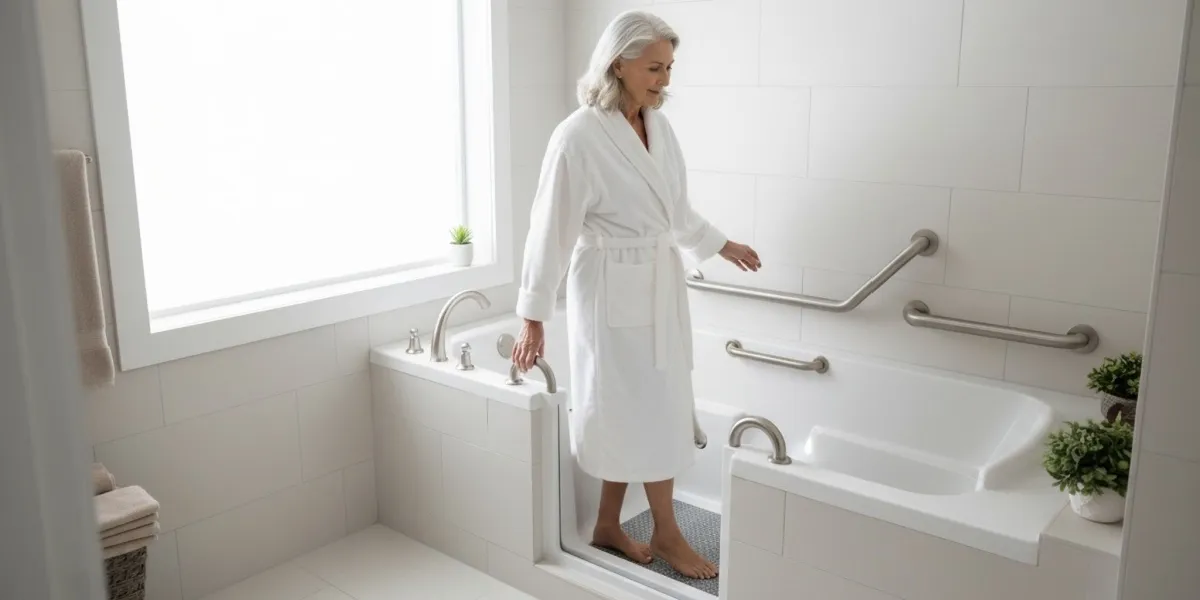
The real debate among installers isn't about quality, it's about the moment of getting in and out. A walk-in tub does eliminate the danger of stepping over a traditional tub wall, which is a genuine fall risk. But the tub itself still has a step-in threshold, typically 3 to 7 inches, since the door needs to seal well enough to hold bathwater. And critically, you have to sit down and wait for the tub to fill before bathing, and wait for it to fully drain before safely standing and exiting, since standing in a tub that's still draining defeats much of the safety benefit. For someone who wants to bathe standing, or who has limited patience for a multi-minute fill-and-drain cycle, a curbless walk-in shower solves the same fall-risk problem without that waiting period.
A few lower-cost alternatives worth knowing about if the full price tag doesn't fit your budget:
- Buying a used or refurbished unit, sometimes available through medical equipment resellers at a meaningful discount off retail
- A roll-in shower instead, which sidesteps the walk-in tub's waiting-period tradeoff entirely while still addressing the same core safety concern
- Modifying your current tub with a cut-out door retrofit, less expensive than a full walk-in tub replacement, though it requires the existing tub to be a compatible material and shape
A practical way to decide: if bathing (soaking, not showering) is genuinely important to daily comfort or a specific therapeutic need, and you're comfortable with the fill-and-drain wait, a walk-in tub is the right tool. If the primary goal is simply solving a fall-risk problem as efficiently as possible, get quotes on a curbless walk-in shower too before committing, since it frequently solves the same underlying safety issue for a comparable or lower total cost.
One financing detail worth knowing: some walk-in tub companies offer their own in-house payment plans, often marketed alongside the free in-home consultation many of these companies provide. Compare the actual APR on any financing offer against a standard personal loan or a 0% introductory credit card before signing, since in-house financing on big-ticket accessibility products doesn't always carry the most competitive rate, even when the marketing emphasizes low monthly payments. A five-minute rate comparison before signing anything can save real money over the life of the loan, regardless of which specific tub or shower you end up choosing in the end. It's a small step that's easy to skip in the moment but genuinely worth the extra ten minutes it takes before you sign.