What a Backup Generator Really Costs
BACKUP GENERATORS
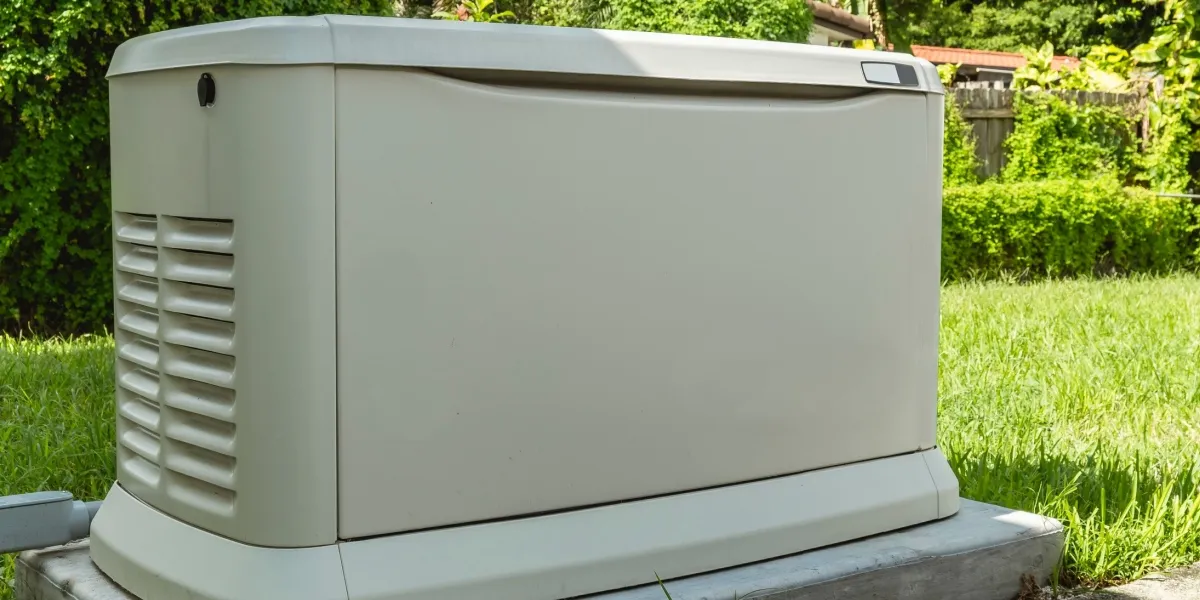
A whole-home standby generator is a genuinely big purchase, and the price range you'll see quoted, anywhere from $5,000 to $25,000, can feel almost meaninglessly wide until you understand what's actually driving it.
How much of your home you want covered is the single biggest factor:
- Essentials-only (refrigerator, some lighting circuits, a well pump, maybe a furnace): 10 to 14 kW, $6,000 to $9,000 fully installed
- True whole-home (also covers central AC, which draws considerably more power than most other circuits): 20 to 26 kW, $9,000 to $16,000 installed
- Larger homes, dual-zone AC, or an EV charger on the same system: 30 kW-plus, commonly $15,000 to $25,000 installed
The generator unit itself is often only 30% to 50% of that installed total. The rest covers the automatic transfer switch, the piece of equipment that senses a power outage and switches your home from utility power to generator power automatically, usually within about 10 seconds, a concrete or composite pad for the unit to sit on, the natural gas or propane hookup, the electrical permit and inspection, and several hours of combined electrician and gas-plumber labor.
Standby and portable options land in genuinely different price and convenience tiers. A portable generator with a manual transfer switch or interlock kit is dramatically cheaper, often $4,000 to $8,000 installed including the switch, but requires you to physically roll it out, connect it, and fuel it every time the power goes out. It also only powers whatever you plug directly into it or route through the manual switch, not the whole house automatically. A standby system costs more but requires zero action from you when the power drops, which matters most for anyone who travels, has medical equipment that needs uninterrupted power, or simply doesn't want to be outside wrestling with a generator during a storm.
Your fuel source affects both cost and convenience too. Natural gas units draw directly from your home's existing gas line if one is nearby, meaning you never have to refuel and the generator can theoretically run indefinitely as long as gas service continues. Propane units need a tank, either one you already have or a new one installed as part of the project, and running time is limited by tank size, though many propane setups still provide days of runtime on a large residential tank. If you don't have a natural gas line to your home already, running one specifically for a generator installation adds meaningfully to the project cost, so it's worth asking your installer to price both fuel paths before deciding.
If you've seen older articles mentioning a federal tax credit for backup generators or battery storage, that changed as of January 1, 2026. The relevant federal residential energy credits covering this equipment ended for any installation placed in service after December 31, 2025. Some state and utility programs still offer rebates for backup power specifically in storm-prone regions, which is worth checking directly with your state energy office or utility rather than assuming any federal credit still applies.
Real estate data from sources including Remodeling magazine and Consumer Reports suggests a standby generator can add somewhere in the range of 3% to 5% to a home's value in areas where power outages are a known concern, which on a $400,000 home works out to roughly $12,000 to $20,000 in added value against a $10,000 to $15,000 installation, though this varies a lot by region and how frequently the local area actually loses power.
Beyond the fuel itself, standby generators need annual professional maintenance, commonly around $300 to $400 a year, to keep the warranty valid and ensure the unit actually starts when it's needed. Skipping this is one of the more common reasons a generator fails to start during the one moment it actually matters.
Rather than guessing based on square footage alone, ask an installer to calculate your home's actual peak load, factoring in which specific appliances would realistically run at the same time during an outage, since square footage alone is a rough proxy at best for how much power your home actually draws.
Lifespan is worth factoring into the cost comparison too. A well-maintained standby generator typically lasts 15 to 30 years or 10,000 to 30,000 running hours, which for most homes spans decades of occasional outage coverage rather than a purchase you'll be replacing anytime soon.
Two or three quotes from different installers is worth the extra week it takes, since both equipment brand and labor pricing vary enough between contractors that the same size system can come in thousands apart depending on who's bidding it.