
The Money Sitting in Grant Programs Most Homeowners Never Apply For
Billions of dollars in federal, state, and local funding sit specifically earmarked for helping people modify their homes for safety and accessibility, and a huge share of it goes unused every single year, not because people don't need it, but because most homeowners have no idea these programs exist.
The largest federal source for veterans specifically comes from the VA. The Specially Adapted Housing grant, for veterans with severe, permanent service-connected disabilities, provides up to $126,526 for fiscal year 2026, adjusted annually based on a construction cost index. The Special Housing Adaptation grant, for a different, somewhat narrower set of qualifying disabilities, provides up to $25,350 for the same fiscal year. Both can be used across as many as six separate adaptations over a veteran's lifetime, meaning the money doesn't have to be used all at once on a single project. A related Temporary Residence Adaptation grant, up to $50,961 for SAH-eligible veterans or $9,100 for SHA-eligible veterans, covers modifications to a family member's home when a veteran is living there temporarily.
For homeowners without a veteran connection, two federal programs are worth knowing about directly:
- USDA Section 504 Home Repair program, offering grants up to $10,000 plus low-interest loans up to $40,000, specifically for very-low-income rural homeowners age 62 and older, funds can go toward accessibility modifications alongside general repairs
- HUD's Older Adults Home Modification Grant Program, providing up to $5,000 per household specifically to help seniors age in place safely
Medicaid is a genuinely underused resource for this specific purpose. Most states operate Home and Community-Based Services waivers, and within those, a category typically called "Environmental Accessibility Adaptations" covers items like grab bars, ramps, widened doorways, roll-in showers, and stair lifts. The logic behind these programs is straightforward from the state's perspective, it's dramatically cheaper for a state to spend $15,000 modifying someone's bathroom than to spend roughly $80,000 a year housing that same person in a state-funded nursing facility. If a parent or family member qualifies for Medicaid, contacting the state Medicaid office directly and asking specifically about this waiver category is the move, since it's not always advertised prominently.
One important note if Medicaid waiver funds are on the table: consult an elder law attorney before accepting them for home modifications, since there can be legal implications for how the home is protected or treated in future Medicaid eligibility calculations, this is a detail worth getting right before, not after, accepting the funds.
Beyond the federal and state level, Area Agencies on Aging exist in nearly every region of the country and frequently offer smaller, faster-to-access grants, commonly $500 to $5,000, specifically for grab bars, ramps, and minor bathroom modifications. These tend to have less red tape than the larger federal programs, making them a good starting point for smaller projects. The national Eldercare Locator, 1-800-677-1116, connects you to your specific local agency regardless of where you live.
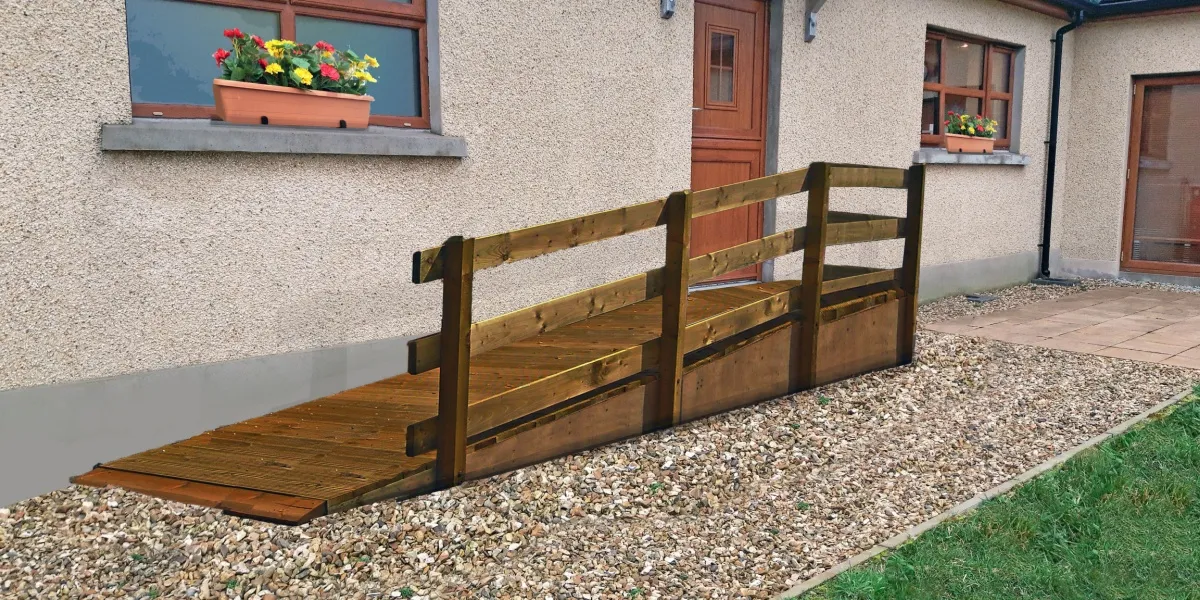
Here's what most of these programs actually cover, so you know what to ask about when you call: bathroom safety modifications (grab bars, roll-in showers, walk-in tubs, non-slip flooring), mobility and accessibility items (wheelchair ramps, widened doorways, stair lifts, threshold ramps), and in some programs, broader health and safety repairs beyond pure accessibility.
A practical way to start: don't wait for a crisis to begin this research. Call your local Area Agency on Aging first, since staff there typically know which federal, state, and local programs apply to your specific situation and can point you toward the right applications rather than making you search blindly. If a veteran is involved, contact your regional VA office directly and ask about both SAH and SHA eligibility, even if you're not sure which category applies, the VA evaluates both from a single application.
If a modification you're planning would also increase your home's overall market value, not just its accessibility, that's worth mentioning to whichever agency you're applying through, since some programs only fund the portion of a project's cost that's specifically tied to the accessibility improvement, not any value added beyond that. Getting clarity on this upfront, before the work begins, avoids a confusing conversation about partial reimbursement after the project's already done. It's a small administrative detail, but one that saves a genuinely frustrating back-and-forth if it comes up unexpectedly after the invoice is already sitting in your inbox waiting to be paid, especially when a genuine grant reimbursement is on the line. A five-minute phone call ahead of time is a small price for avoiding that headache later.